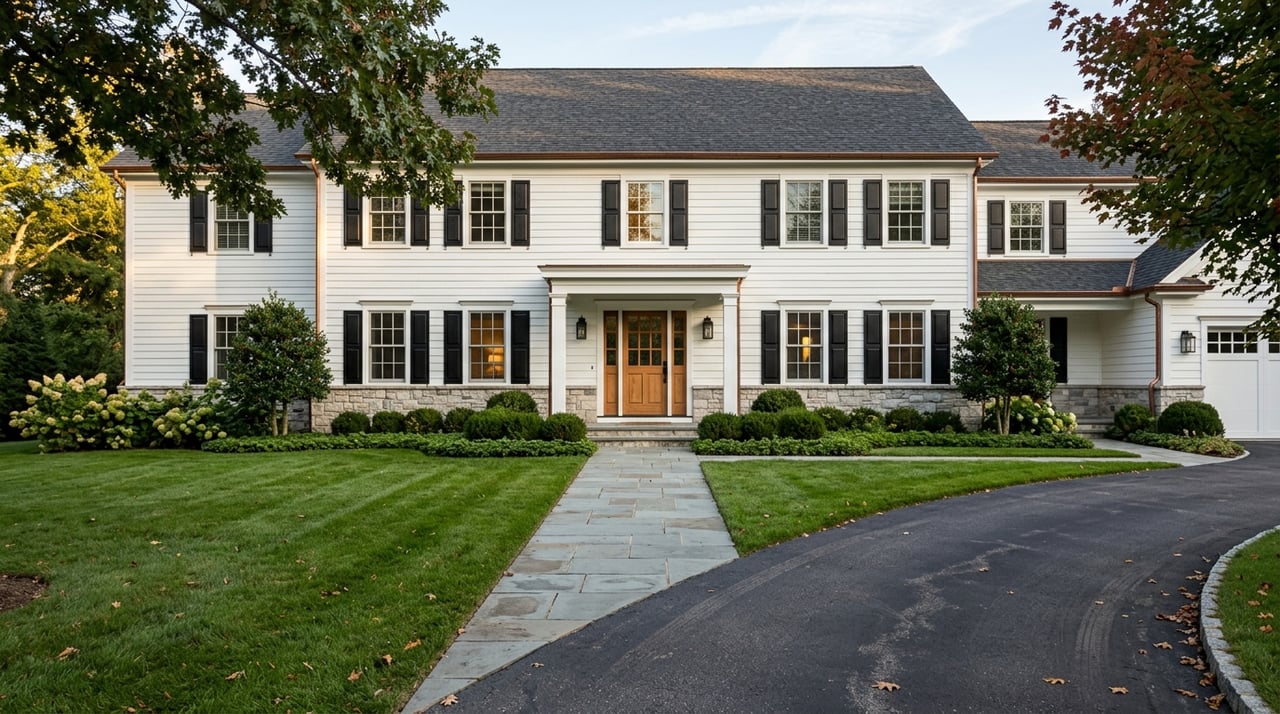
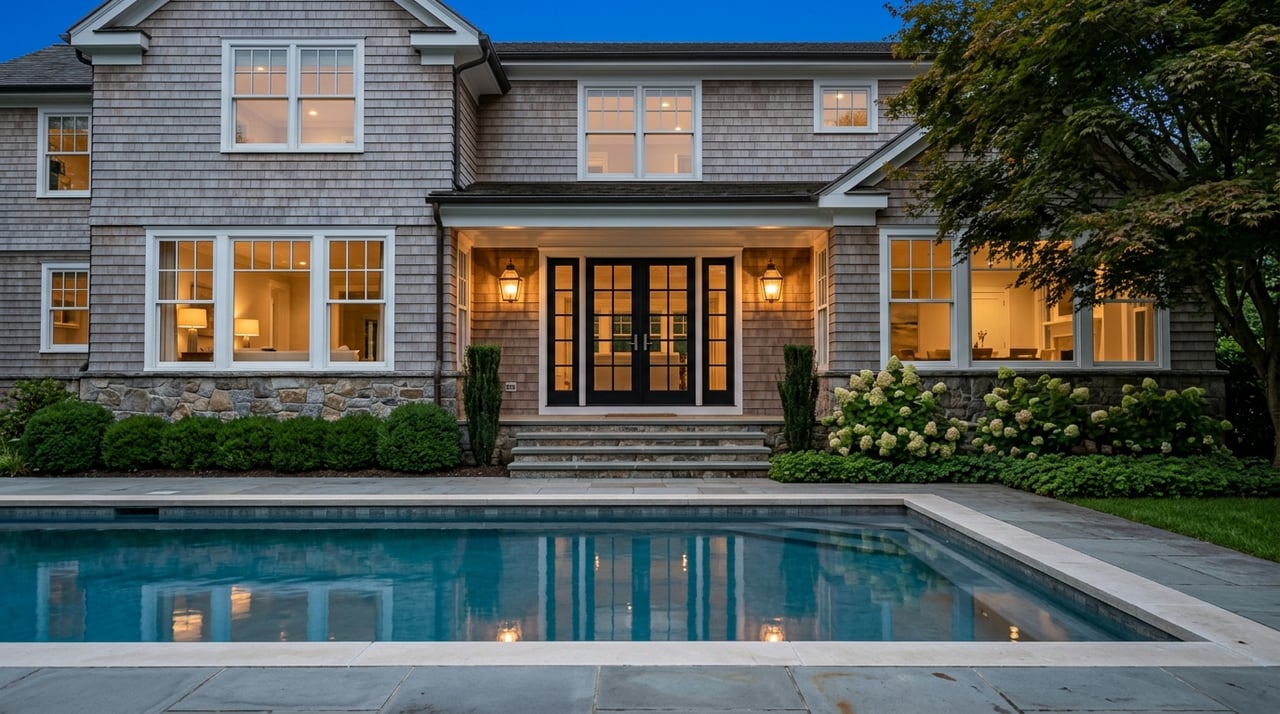
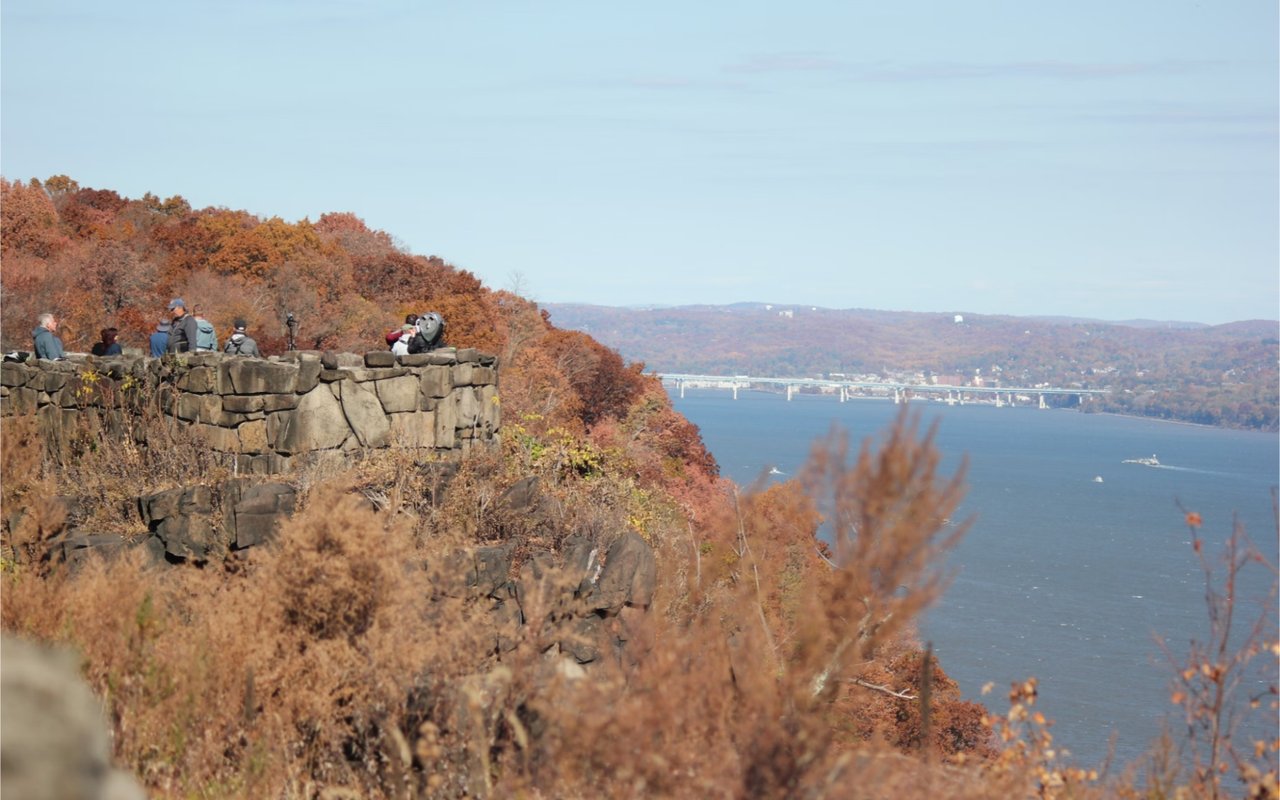
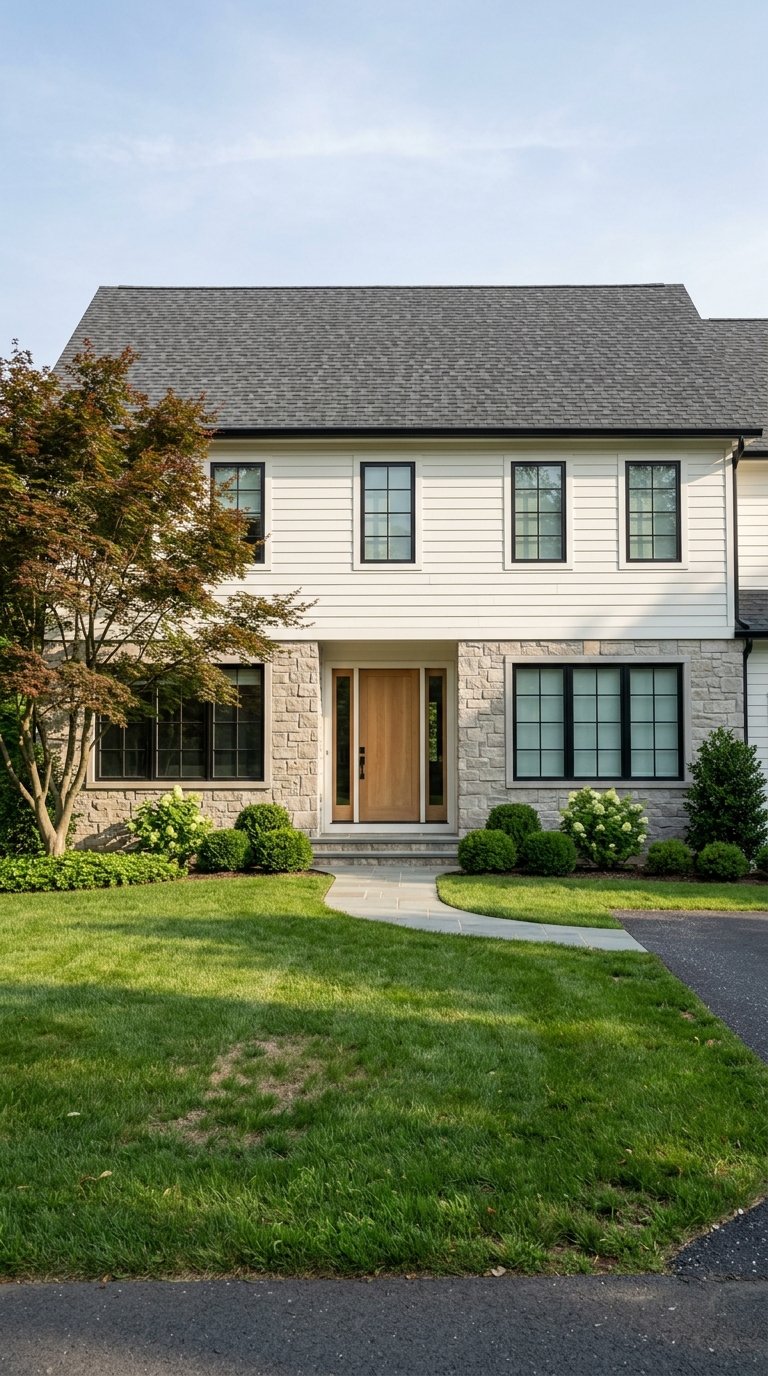
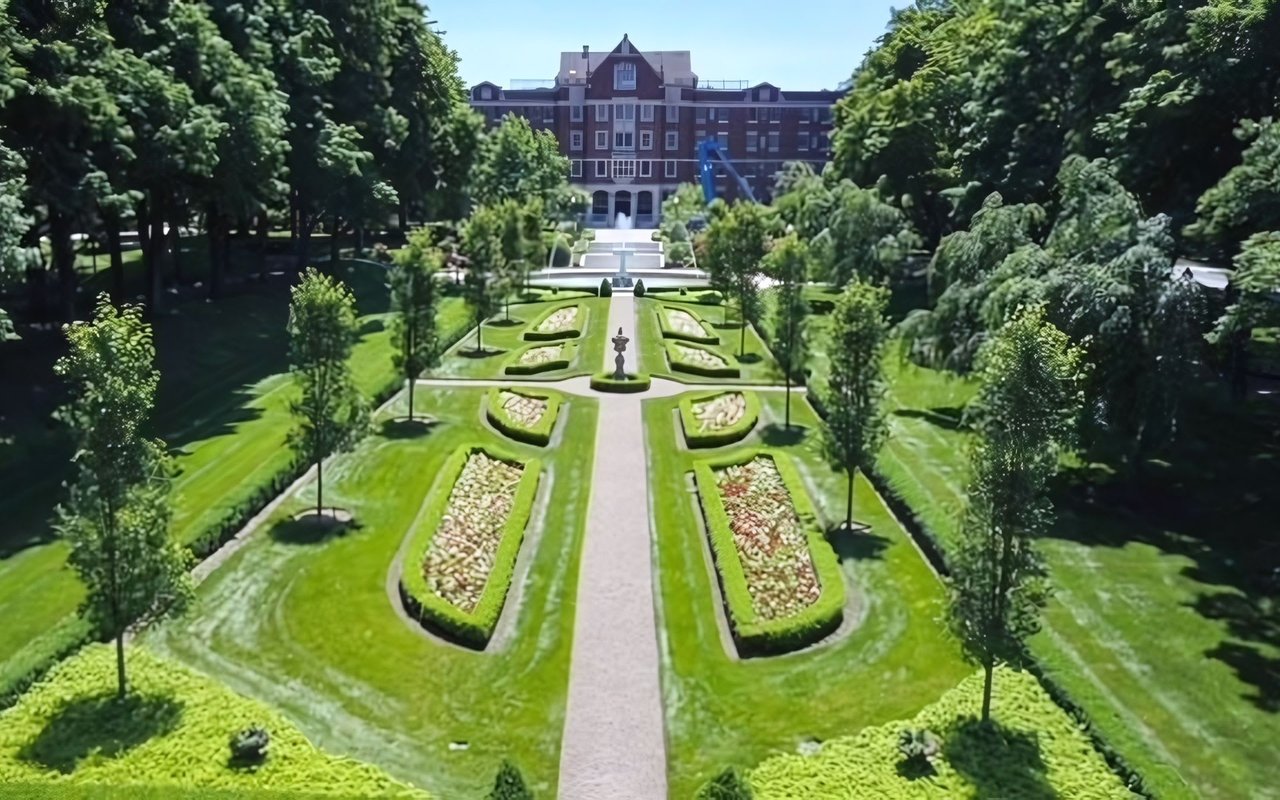
Drive past 75 Montebello Road and you'll see a large brick and stone building set back from the street behind mature trees. Most people who live in the Village of Montebello drive past it without a second look. Fewer could tell you that the entire village, every street sign, every piece of mail, every "Welcome to Montebello" banner strung up for this year's Jazz Festival, takes its name from that one building.
The mansion came first. The village came second, borrowing the name eight and a half decades later. And once you trace what happened to that mansion, and to a handful of other estates scattered across the same 4.5 square miles, a pattern starts to show up everywhere else in town: Montebello rarely builds a new civic building from scratch. It takes an old estate, gives it a new job, and keeps the name.
A Weekend House Built By a Man Named Ryan
In 1901, financier Thomas Fortune Ryan and his wife Ida Barry Ryan replaced an 1860s farmhouse on a Ramapo hilltop with a 44-room summer residence. They hired Stanford White, the architect behind some of the era's most recognizable Manhattan buildings and country estates, to design it. The finished house had a private chapel, an electric elevator, 13 fireplaces, and two bowling alleys. The estate around it ran as large as 1,000 acres, with a working farm and five smaller houses built for the Ryan sons scattered across the property.
The Ryans looked out from the hilltop at the Ramapo Mountains and named their new home "Montebello," Italian for beautiful mountain. That name outlived every owner who came after them.
Four Owners, One Address
Ida Barry Ryan died in 1917. What happened to the mansion over the next century reads less like a single property record and more like a rotating cast of very different tenants, none of whom tore the building down.
| Year | Owner | Use |
|---|---|---|
| 1921 | Edward Swann, NYC District Attorney | Private residence, briefly |
| 1921 | Archdiocese of New York | Retreat for St. Joseph's College and Seminary |
| 1944 | Gustav Mayer | Vacant, vandalized, planned country club never built |
| 1951 | Phelps Dodge Corporation | Corporate records headquarters, 31 years |
| 1984 | Gary Goldberg | Financial services headquarters and office park |
| 2022 | Serenity Healthcare Services | Mental health services center |
Phelps Dodge, the copper mining company, used the mansion to store corporate records for three decades, which is a strange final act for a house that once had a private chapel and its own bowling alley. When the company relocated in the early 1980s, Rockland financial advisor Gary Goldberg bought the property for $1.6 million and spent a year restoring it into a headquarters and office park. That was two years before the Village of Montebello even incorporated in 1986, which means the village borrowed its name from a private office building that had only just reopened.
The mansion changed hands one more time in 2022, selling for $8 million to become a management company for mental health providers. The seller, Goldberg Montebello LLC, was represented by Jon Paul Molfetta of Keller Williams, a name still active in Rockland real estate today. Four uses, four very different tenants, and the building itself never came down.
The Party Someone Started at Home
Before the mansion became a mental health center, and while it was still Gary Goldberg's headquarters, Goldberg started throwing jazz festivals there. The tradition eventually outgrew the mansion grounds and moved to Montebello Village Hall, where it now runs as an official village event.
This year marked the third annual festival, held August 30, 2026, from 1 to 6 p.m., timed to coincide with the village's 40th anniversary of incorporation. The lineup featured Conrad Herwig's Latin Side All Stars, Hendrick Meurkin's Samba Jazz Quartet, and the Richie Morales Quartet, following past years that brought in the Bill O'Connell Quintet, the Curtis Brothers, and the Klezmatics. Food trucks filled the gaps between sets, and attendees brought their own lawn chairs.
What's easy to miss is that this is a private party that got adopted by a municipality. A resident started hosting music on his own property, the village picked it up as an official tradition, and forty years after incorporation it's still running on the same premise: bring people to a lawn, put a band on it, call it a celebration.
A Village Hall That Used to Be Somebody's Cottage
The building hosting that festival isn't purpose-built civic architecture either. Montebello's Village Hall, at One Montebello Road, is a Tudor and English Cottage style structure built around 1920 and attributed to architect George Fowler. Before it held village board meetings, it was known as the Morse Cottage, a private residence. The village designated it a historic landmark in December 2008, decades after it had already been repurposed as the seat of local government.
It's the same move as the mansion, just on a smaller scale. Rather than construct a new municipal building, the village took over an existing house and kept using it.
Three More Estates Still Working
Montebello's Historic Preservation Commission, the first certified local government for historic preservation in Rockland County, has designated four properties as local landmarks. The mansion and Village Hall are two of them. The other two tell the same story from different angles.
Fant Farm, also called Winaki Farm, sits on Spook Rock Road and dates to around 1850. Its Gothic Revival farmhouse, barns, and stone walls earned landmark status in January 2006, preserved as a snapshot of what a country gentleman's estate looked like in Rockland County over a century ago. Johnson Farm, on Viola Road, traces back even further, with a vernacular farmhouse from the 1825 to 1835 period that stayed in the same family for generations before the village recognized it.
Then there's Cobblestone Farm, on Viola Road, which never made the official landmark list but shows up in every historical account of the village. In 1907, Henry von L. Meyer Sr., founder and vice president of White Laboratories, carved 200 acres out of the Ramapo countryside for a working farm and estate. Its cobblestone barn, built from stones cleared out of the fields, gave the property its name. The New York Times once called it one of the model showplaces in Rockland County. Today, part of that land holds private homes on Cobblestone Farm Court and part of it sits across the street from Suffern High School.
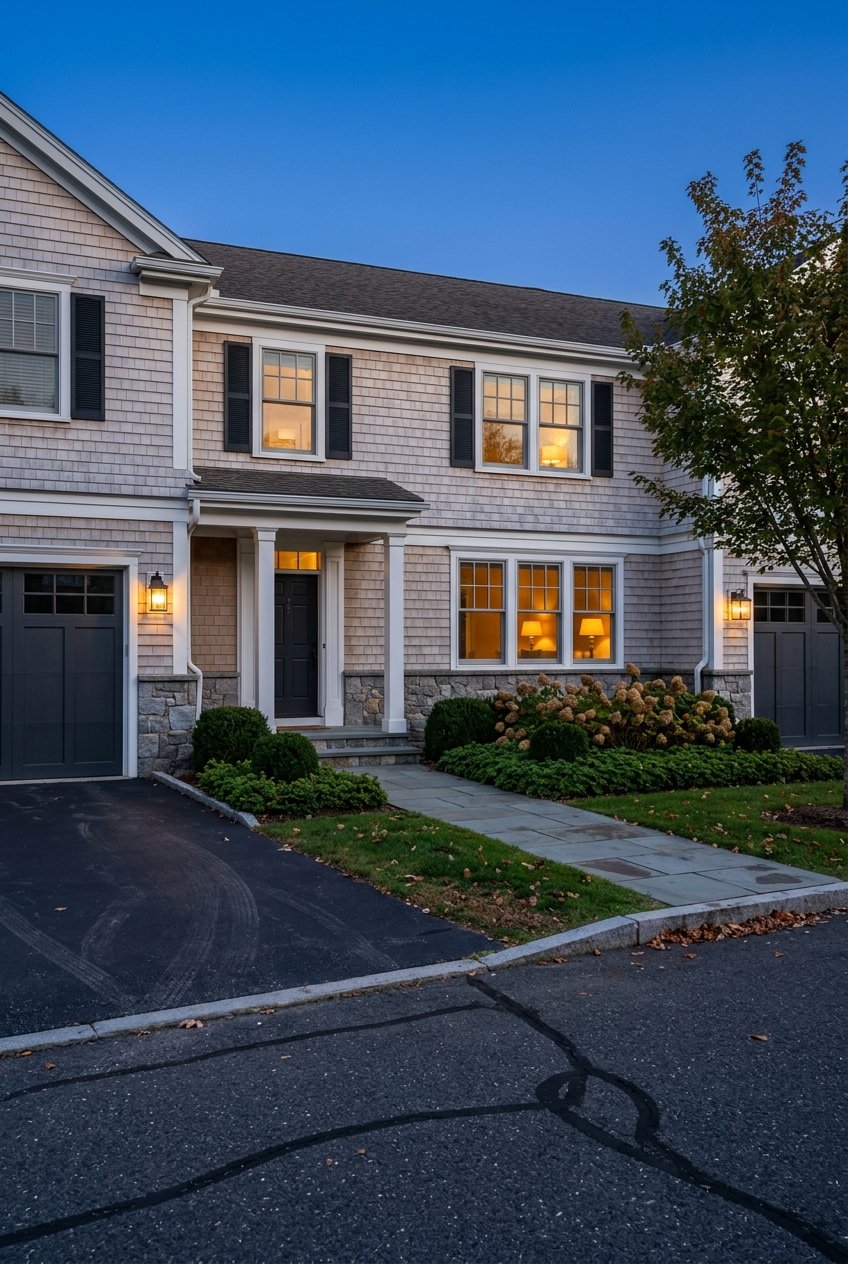
Even the Ryan estate itself got carved up rather than erased. Twenty single-family carriage homes went up on the estate's southern acreage under the name Ryan Mansion Vistas, and a subdivision on the northern edge sits on a street called Fortune Way. If you live on either street, your address is a direct reference to a Gilded Age financier who never lived to see the village that eventually took his family's name.
The Park With a Hundred-Year-Old Cabin
The habit isn't limited to mansions and farmhouses. Kakiat County Park, a 376-acre Rockland County park within Montebello's borders, still has a log cabin built in 1922 standing near its entrance, a relic the county parks system kept rather than replaced. The Kakiat Trail starts at a footbridge over the Mahwah River, which is stocked annually with trout, and climbs through the park before crossing into Harriman State Park and connecting to the Suffern-Bear Mountain Trail. There's an off-leash dog run near the parking area, and the county parks department still runs guided ranger tours through the property.
Even the village's own naming habits follow the same logic. Kathryn Gorman Ponds Park, a 25-acre space with walking trails, is named for Montebello's first mayor. The community center on Route 202 carries the name of the second mayor, Dr. Jeffrey Oppenheim. The village didn't invent new civic honors. It kept attaching the names of the people who built the place to the places themselves.
What This Says About Living Here
None of this changes anything about property values or school zones or commute times. What it does is explain something about the texture of daily life in Montebello that a typical town profile leaves out. This is a village that grew by inheriting a handful of large estates and giving each one a second, third, or fourth career, rather than clearing land for new municipal buildings. The house you're picnicking near at the Jazz Festival was once a corporate records vault. The Village Hall where your zoning board meets was once a private cottage. The park where you walk your dog off leash still has an entrance cabin your great-grandparents' generation would recognize.
If you're the kind of person who likes knowing why the street signs say what they say, that's worth carrying around for whenever late August rolls around again and Village Hall fills up with lawn chairs and food trucks.
If you're weighing what your own piece of that history is worth today, whether it's a home near Cobblestone Farm Court or one of the newer builds off Airmont Road, The Molfetta Team knows this village well enough to talk through it in more than a paragraph. Book a consultation whenever you're ready to talk specifics.